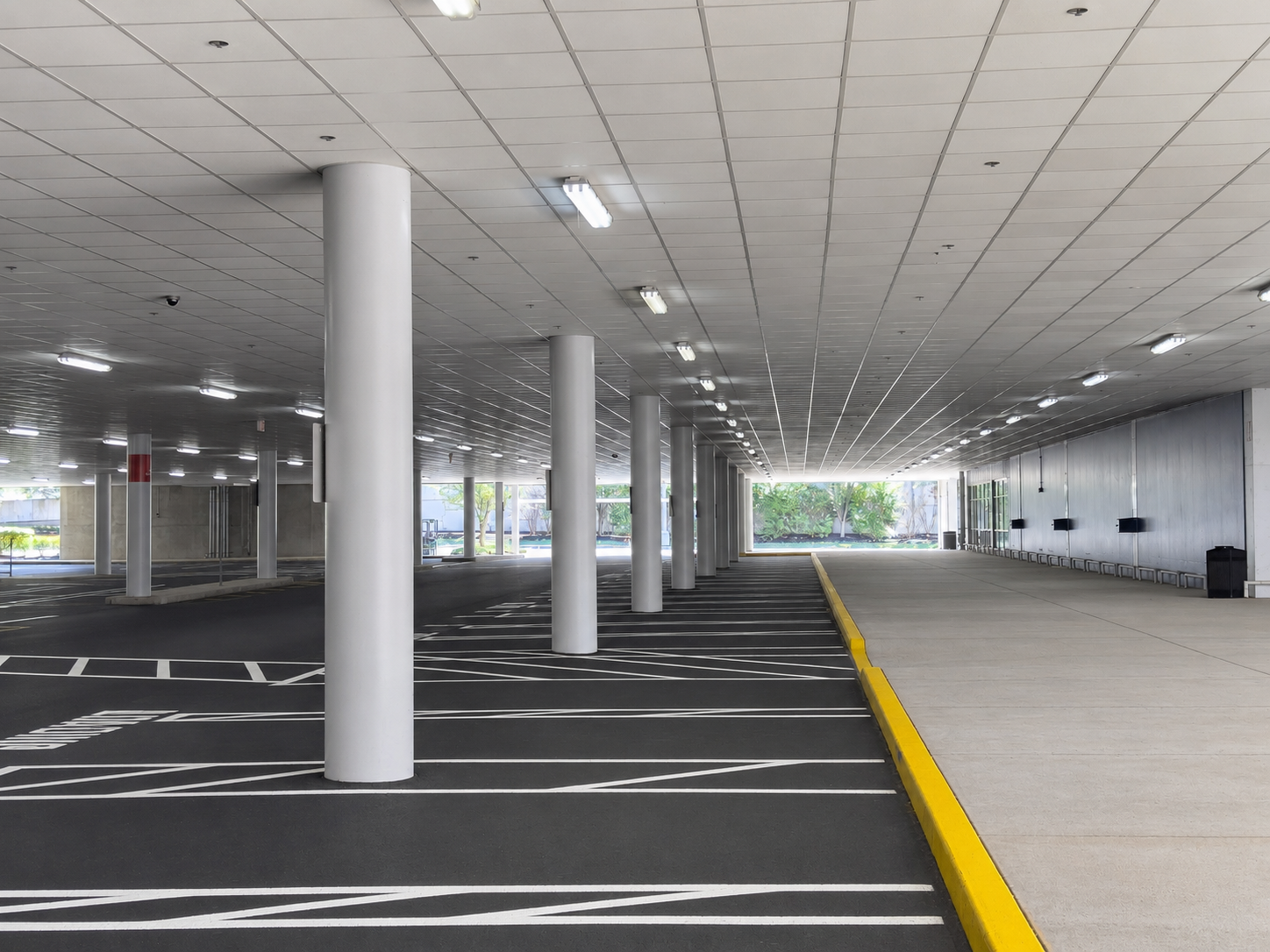
Your parking structure is one of the few places on your property where the building itself can put a visitor in the hospital, and where the bill for it lands on you. That’s not a scare tactic, it’s just the math. The National Floor Safety Institute reports that falls account for more than 8 million emergency room visits in the U.S. every year.1 The National Safety Council found that falls alone sent about 3.85 million adults 65 and older to the ER in 2023.2 And parking lots and garages, with their fluid drips, damp corners, and dim lighting, are exactly where a lot of those falls happen.
So let’s talk plainly about what a fall actually costs and where cleaning fits in. Everything here comes from real injury and claims data, not invented case studies, and it adds up to a simple idea: the surfaces people walk on in your parking areas are a live liability, and keeping them clean is one of the cheapest ways to keep it in check.
Slip-and-fall injuries hurt twice, medically and financially. The average hospital bill for one runs somewhere in the $30,000 to $40,000 range.1 On the legal side, most slip-and-fall settlements land between $15,000 and $50,000 for a moderate case, with the national median often cited around $60,000 and serious injuries climbing much higher.3 Falls at stores and malls tend to run higher still, in the $75,000 to $200,000 range, because those businesses carry solid insurance and owe customers a clear duty of care. Jury Verdict Research has put the median premises-liability verdict near $98,000, with the average dragged way up by the truly catastrophic cases.4
All of that sits against your insurance, and a typical commercial general liability policy caps out around $1,000,000 per occurrence.3 One serious fall can take a real bite out of that, and a catastrophic injury can blow right through it. Nobody can predict the exact number for your exact garage. The point is simpler than that: the cost of one avoidable fall dwarfs the cost of keeping the surface clean. Set a modest, predictable cleaning schedule next to a five- or six-figure claim, and it’s not a close call, which is why insurers and risk managers alike tend to treat routine surface maintenance as a core loss-prevention measure rather than a nicety you can skip when money’s tight.
Parking structures stack up hazards like almost nowhere else. Cars drag in water, road salt, and oil, and drip fluid across the deck. Humidity keeps it all damp. Spilled fluids and tracked-in grime just sit there until someone removes them, forming thin films that are slick and hard to spot. Now layer that over concrete in a space that’s dim to begin with, where a film of dirt on the deck and walls soaks up what little light there is, and you’ve got a hazard nobody sees until their foot’s already on it. Those are the exact conditions the fall data describes, and they’re the exact conditions a good cleaning takes away.
Seasons and location make it worse. Cold months bring in sand and de-icing salt that grind underfoot. Urban structures collect debris, graffiti, and sometimes worse, all of which is both a slip hazard and a real safety-perception problem for anyone walking to their car after dark. A cleaning program that handles the deck, the walkways, the graffiti, and the waste isn’t just tidying up. It’s stripping out the specific things that turn into the fall claims you just read the numbers on.
Here’s the thing a premises-liability case actually hinges on: did the owner know, or should they have known, about a dangerous condition, and did they fail to deal with it? That’s why your maintenance records matter so much. Legal guides on slip-and-fall claims consistently list maintenance logs and inspection records among the things that decide how a case turns out, because they show whether you took reasonable care.3 A dated record of regular professional cleaning, paired with an incident log, speaks directly to that question.
And it cuts both ways. With no records, a plaintiff paints you as an owner who ignored an obvious hazard, and there’s nothing to push back with. With a steady record of scheduled cleaning, you can show ongoing, documented care instead of neglect. Cleaning brings down how often incidents happen. Documented cleaning also strengthens your hand on the ones that happen anyway. So think of the photos and receipts as evidence, not paperwork, because in a premises case that’s exactly what they are.
There’s a business side to this beyond liability. A visitor who has to walk through your structure to reach an elevator or the exit, often alone, sometimes at night, is reading the place for safety the whole way. A clean, well-lit, odor-free path feels fine and they never think about it. A grimy, dim, foul-smelling one feels sketchy, and that feeling decides whether they come back and what they tell people. An unsafe-feeling garage quietly sends folks to the competitor with better parking. So a cleaning program is really doing two jobs at once: dropping the fall risk that creates claims, and protecting the experience that keeps people using the place.
Fall risk isn’t steady all year, and that’s worth building into your schedule. Cold months bring sand and de-icing salt tracked in on undercarriages, leaving a gritty, slick residue on decks and walkways. Wet seasons keep surfaces damp longer and wash oil into the low spots where it pools. In humid places like a lot of Texas, decks just stay damp more of the time, which stretches out the window where a slick spot can catch someone. Matching your cleaning to those patterns, more attention in the seasons that create the most hazard, keeps the surface safest when the risk is highest instead of treating every month the same.
Where you are shapes which hazards dominate, too. Urban structures pile up debris, graffiti, and sometimes human waste, each of which is both a slip or biohazard concern and a safety-perception problem after dark. Suburban retail lots deal more with vehicle fluids and tracked-in grime. The common thread is that none of it clears itself. It sits and builds until a cleaning takes it away, and every bit of it is a documented contributor to the kind of fall the injury data describes. A crew that reads the specific conditions of your structure and cleans accordingly beats a generic once-over every time.
It helps to see the two payoffs as one system. The cleaning itself cuts how often incidents happen, by removing the slick, hard-to-see conditions that cause falls. The documentation cuts what the incidents that still happen end up costing you, by giving you proof of reasonable care on the exact question these cases turn on. One lowers how often you get hit. The other lowers how hard each hit lands. Run them together and the effect on your exposure is bigger than either alone, which is why the record-keeping isn’t a bonus tacked onto the cleaning. It’s part of what makes the cleaning pay for itself.
This is also where it connects to your insurance over time. Carriers price liability coverage on claims history, so a structure that visibly produces fewer incidents becomes a better risk, and a documented maintenance program is the kind of proof that helps your case at renewal. You’re not just dodging individual claims, you’re building a record that can improve how your whole account gets viewed. If you’re thinking a few years out, that compounding matters as much as any single fall you avoid. And there is a quieter benefit worth naming: peace of mind. When you know your surfaces are being cleaned on a schedule and the records are being kept, you stop worrying every time it rains or every time you get a call about someone stumbling near the elevator. You have already done the reasonable thing, and you can prove it. For a busy owner or property manager juggling a hundred other things, taking a nagging what-if off the table and knowing the paperwork is handled has real value on its own, even before the first claim is ever avoided.
Here’s the honest version. Falls are common and expensive, parking surfaces are a leading cause, and these cases come down to whether you can show you took reasonable care. Regular cleaning goes after the hazard, and documented regular cleaning goes after the legal exposure. Gleam cleans decks, walkways, and structures with the right equipment, and supplies the dated before-and-after records that support both your insurance file and your defense if a claim ever comes. The cleaning lowers how often incidents happen, and the records lower what each one costs you. Start the conversation at iwantgleam.net.
Q: How common are slip-and-fall injuries?
A: Very. The National Floor Safety Institute reports falls account for more than 8 million ER visits a year in the U.S. The National Safety Council reported roughly 3.85 million adults 65 and older visited the ER for falls in 2023 alone.
Q: How much does a slip-and-fall claim cost?
A: The average hospital bill runs around $30,000 to $40,000. Settlements commonly land between $15,000 and $50,000 for moderate cases, with a national median often cited near $60,000. Falls at stores and malls frequently run $75,000 to $200,000, and serious injuries go higher.
Q: Why are parking garages such a high-risk spot?
A: They pile up hazards: vehicle-tracked water, oil, and salt, damp surfaces from humidity, and naturally poor lighting made worse by grime on the deck and walls. Those are exactly the slick, hard-to-see conditions that cause falls.
Q: Does cleaning documentation actually help in a lawsuit?
A: Yes. These cases turn on whether the owner knew or should have known about a hazard and failed to act. Dated maintenance logs and inspection records are standard evidence of reasonable care and can be decisive in how a claim resolves.
Q: What insurance limit is usually at stake?
A: Commercial general liability policies commonly cap around $1,000,000 per occurrence. A single serious fall can eat a big share of that, and a catastrophic injury can exceed it, which is why prevention is worth far more than it costs.
Q: How often should parking areas be cleaned?
A: Monthly is a solid baseline for high-traffic structures, with lower-traffic lots sometimes running quarterly. Humid climates like DFW keep surfaces damp and raise slip risk, so high-liability zones may need more frequent service. Tracking incidents over the first year tells you if the frequency is right.
Walk your parking areas with a fresh eye: where does water pool, where’s the deck slick or dim, where would a fall most likely happen? Put those spots on a documented cleaning schedule. Gleam can clean the surfaces and hand you the dated records that back up both your insurance file and your defense if something goes wrong. Start at iwantgleam.net.
1. National Floor Safety Institute (NFSI), slip-and-fall injury and cost statistics, as reported across premises-liability sources. (2025-2026).
2. National Safety Council, emergency-department fall data for adults 65+, 2023.
3. Attorney-reported slip-and-fall settlement data and premises-liability claim analyses, including Insurance Information Institute liability payout references. (2026).
4. Jury Verdict Research, premises-liability verdict data, as reported by Maryland Injury Law Center. (2023).

.svg)
.svg)
.svg)


© 2025 Gleam. All rights reserved. · Privacy Policy · Terms of Service